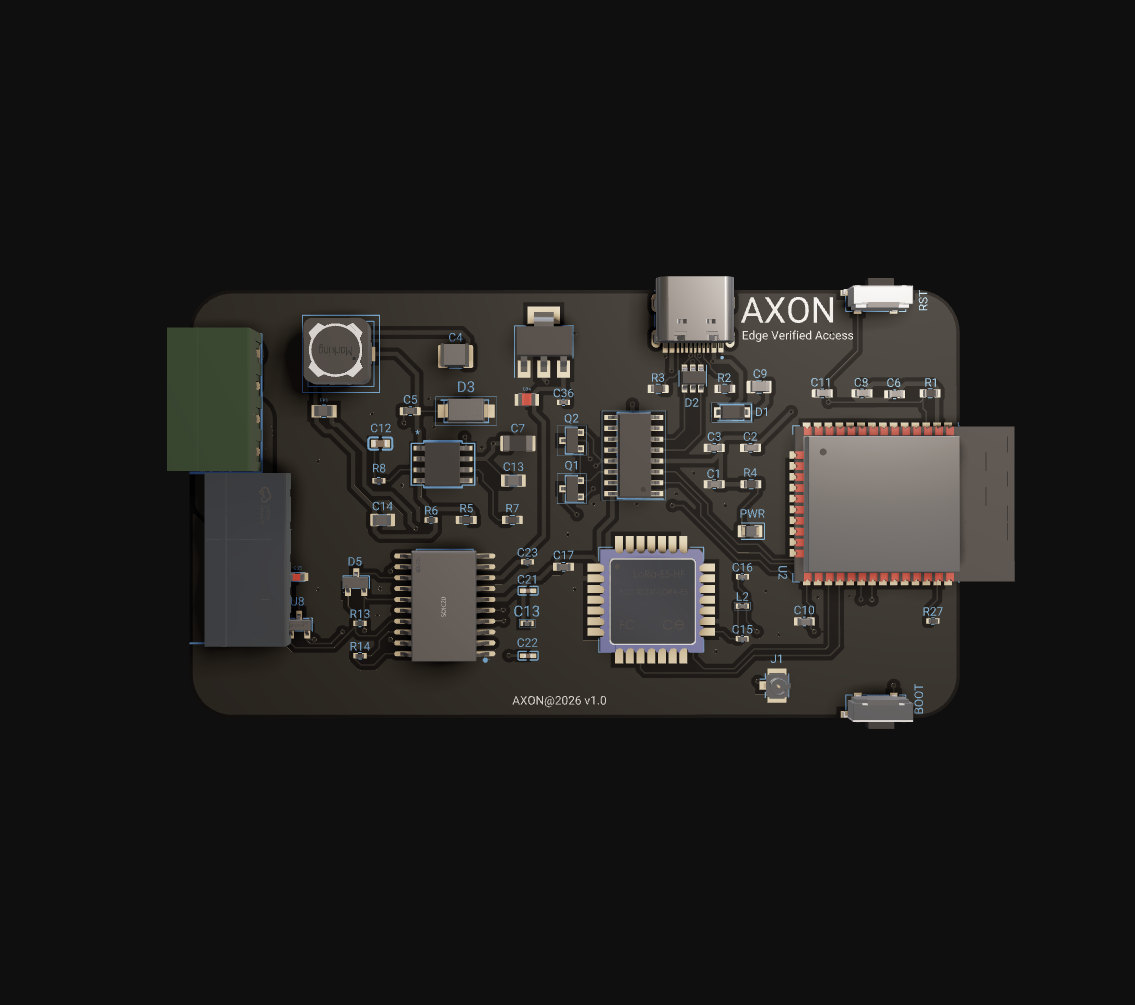
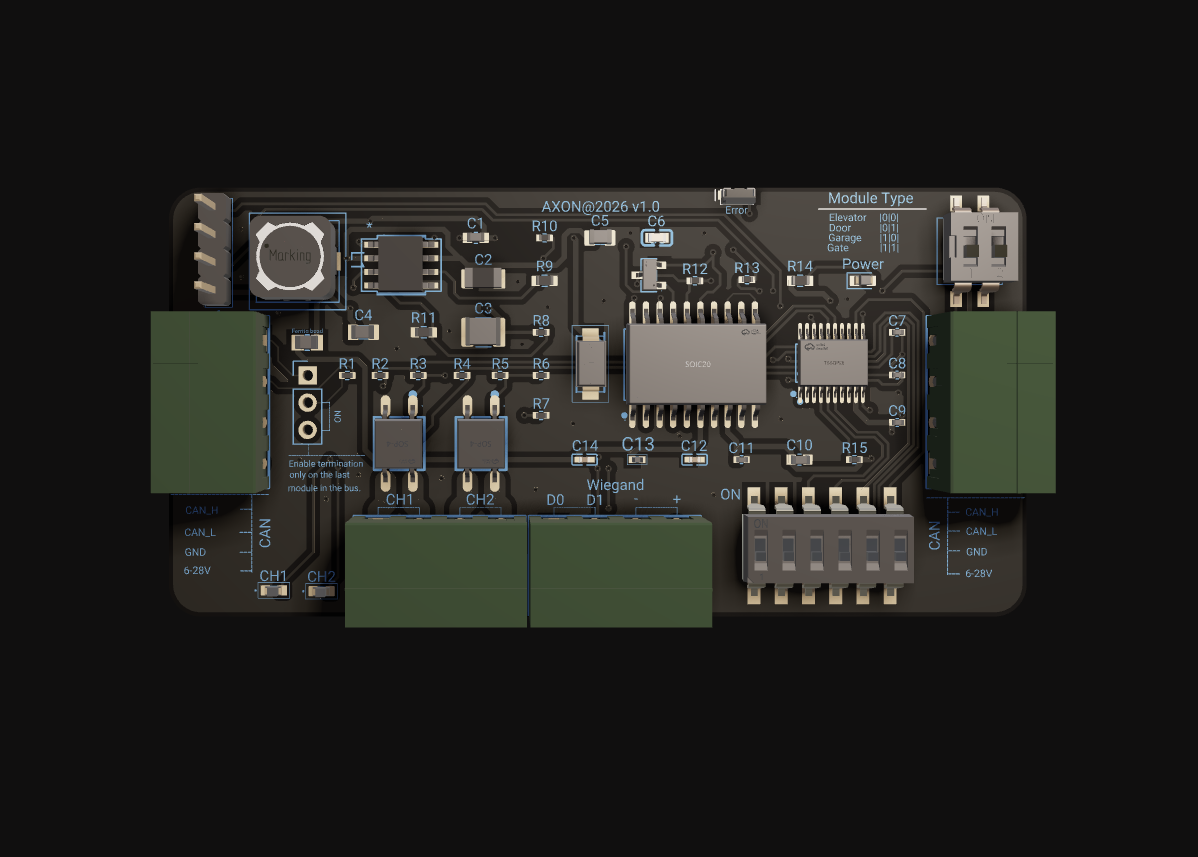
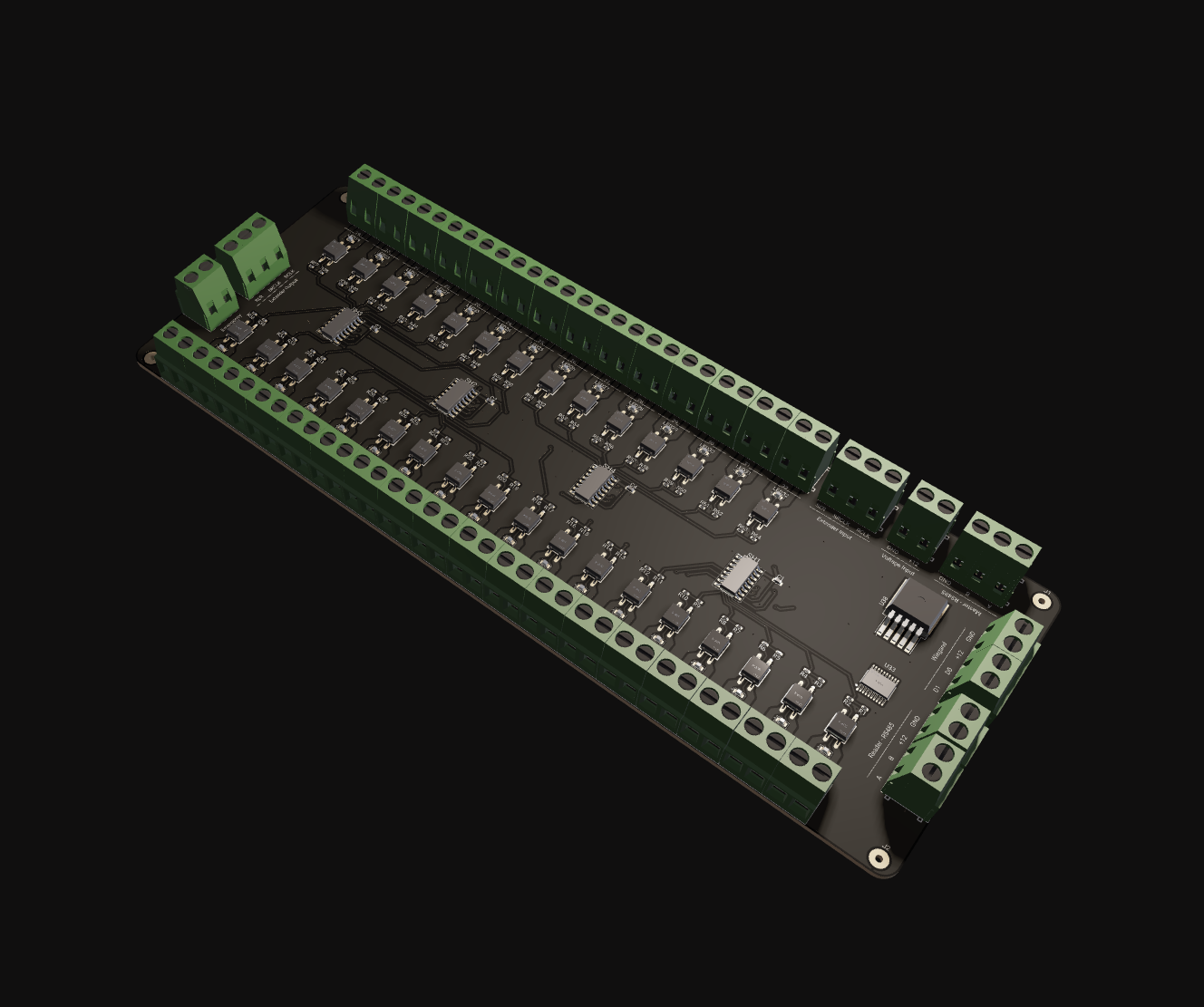
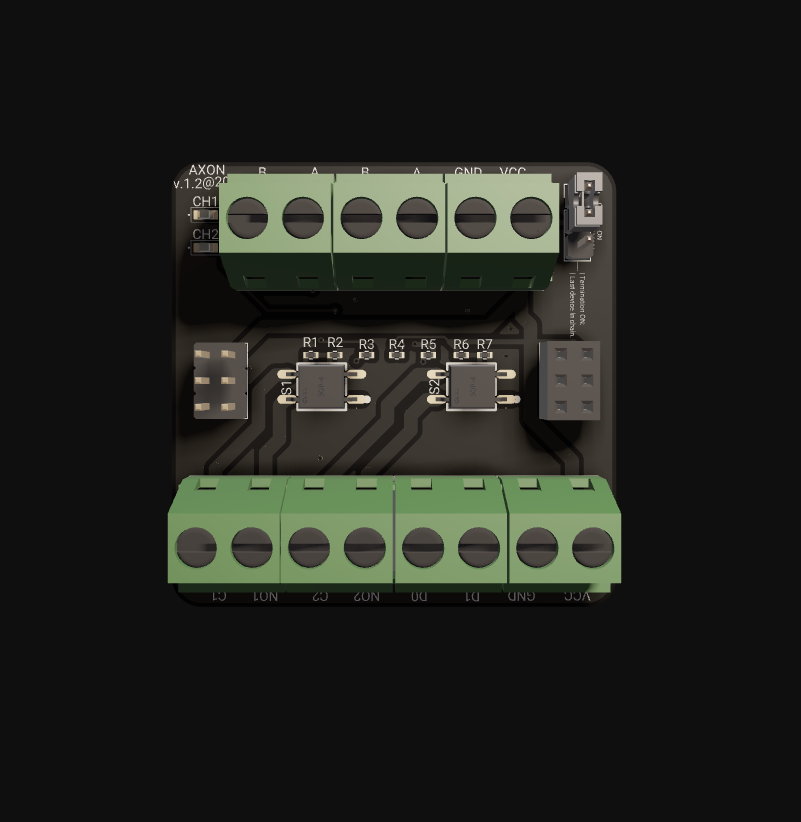
Engineering deep-dives written from real firmware and field deployments, not from marketing copy. Each guide documents one AXON product end-to-end — pinouts, bus configuration, encryption, failure modes, installation requirements, and what is shipping today versus what is on the roadmap.
The AXON Technical Documentation library is a collection of twelve product deep-dives covering every module in the AXON access control system. Each article is written from firmware source, schematic review, and field installation experience — covering cabin controllers, floor nodes, encrypted RFID readers, Ethernet/GSM/LoRa communication modules, relay and I/O expanders, and power/bridge boards. Designed to be referenced by integrators, electricians, and procurement engineers in Kosovo and the wider region.
Why this library exists
Most access control vendors publish datasheets that read like sales sheets — long lists of features, no engineering detail, and a contact form when you want to know how something actually works on the wire. That is not useful when you are sizing a CAN backbone for a twenty-floor riser, deciding whether to terminate a LoRa link with a directional antenna, or wondering whether a relay module's output stage will survive an inductive kickback from an elevator brake coil.
This documentation library exists because we built every board in the AXON system ourselves, in Kosovo, and we know what the firmware does — line by line — because we wrote it. So the answers we give in these guides come from the source, not from a marketing team summarising a product brief. When an article says "the CAN controller pauses for thirty seconds after five consecutive errors and then re-initialises", that statement is grounded in the code path that handles it. When an article says "the relay output is driven from the local card-authorisation path rather than from a CAN command issued by the Master", that is what the firmware does today — even though it is not what the long-term architecture is supposed to look like.
We document the gap between current implementation and design intent openly, because integrators planning rollouts deserve to know what is shipping and what is roadmap. There is no honest way to land a hardware deployment with a vendor that pretends the gap does not exist.
What you will find here
The twelve articles below cover the full AXON product line. Six modules are shipping today with stable firmware and field deployments in Prishtinë and elsewhere in Kosovo. Six are in development with prototypes on the bench, firmware in active integration, and documentation already written so integrators can plan ahead. Every article follows the same structure: an answer-summary box at the top for the impatient reader, then sections covering what the module does, required components, end-to-end operation, bus configuration, pinout, communication architecture, protections, installation, troubleshooting, comparisons to alternatives, roadmap, and an FAQ block.
For deeply technical readers — embedded engineers, building automation integrators, certified security installers — start with the floor node article (AXON Node) because it is the most thoroughly documented and explains the AES-128 CTR encrypted CAN bus that ties most of the system together. From there, the cabin controller article (CCU-32) explains how floor relays are driven in an elevator integration. The reader article (URX-Secure) explains how DESFire EV2 anti-cloning works in practice. The communication module articles (ICM-GE, ICM-LR) cover Ethernet, GSM, and LoRa uplinks for sites without local fibre.
Browse by category
The twelve articles group naturally into five families. Use the category labels below to jump to the section that matches what you are looking for, or scroll through the full grid.
The brain inside the elevator cabin — holds floor permission logic and drives per-floor relays to the elevator controller's call-button matrix.
AXON CCU-32
Cabin Control Unit for 32-Floor Elevator Access
The cabin-side master controller with 32 individually-addressable relay outputs that hand the elevator controller a "this floor is authorised" signal per call button. Holds the authoritative permission table for the cabin and synchronises with floor Nodes over the encrypted CAN bus.
Hardware-addressed end nodes installed at each elevator landing or building entrance — capture RFID, drive door release, and report state to the cabin over CAN.
AXON Node
Floor Node with Encrypted CAN Bus (AES-128) & Wiegand-26
An STM32F072-based floor module that reads Wiegand-26 cards, drives two relays, and talks to the cabin master over a 250 kbps CAN bus with every payload encrypted in AES-128 CTR mode. DIP-switch addressed, hardware-replaceable in under five minutes.
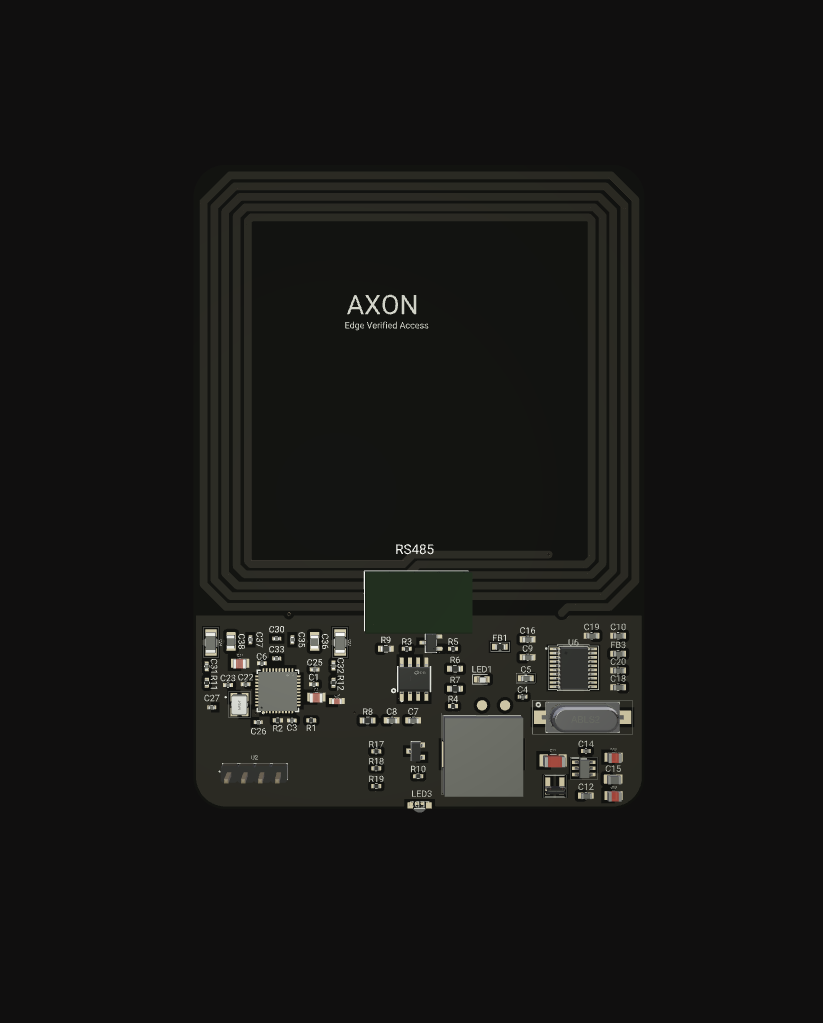
Credential capture devices — encrypted DESFire readers for new installs, Wiegand-to-RS-485 converters for retrofits over legacy reader infrastructure.
AXON URX-Secure
Encrypted RFID Reader (DESFire, Anti-Cloning)
A MIFARE DESFire EV2 reader with mutual authentication and per-session session keys, replacing Wiegand-26 where new installations require resistance to credential cloning. Outputs over the AXON binary protocol with CRC16 protection.
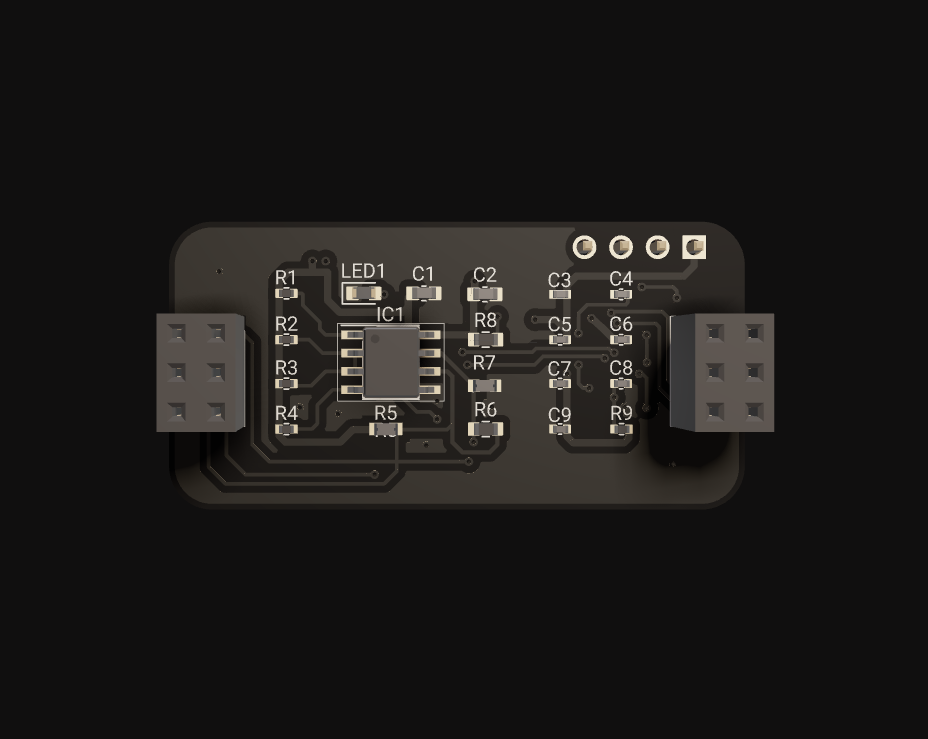
A compact converter that takes any third-party Wiegand-26 reader's D0/D1 lines and republishes the credential over RS-485 onto the AXON bus. Lets retrofit projects keep existing reader hardware while moving the network side onto the encrypted AXON backbone.
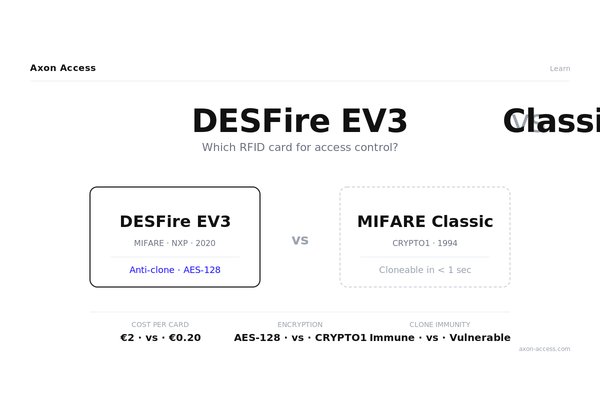
Honest comparison: when to pay for DESFire EV3 anti-cloning vs accepting Classic's clonability. Cost vs security trade-offs, mutual authentication walkthrough, and where each card type belongs in a real deployment.
Boards that connect an AXON site to the outside world — Ethernet for fibre-served buildings, GSM for fallback or rural, LoRa for distributed campuses, plus direct elevator-controller integration.
AXON ICM-GE
Integration & Communication Master (Ethernet + GSM)
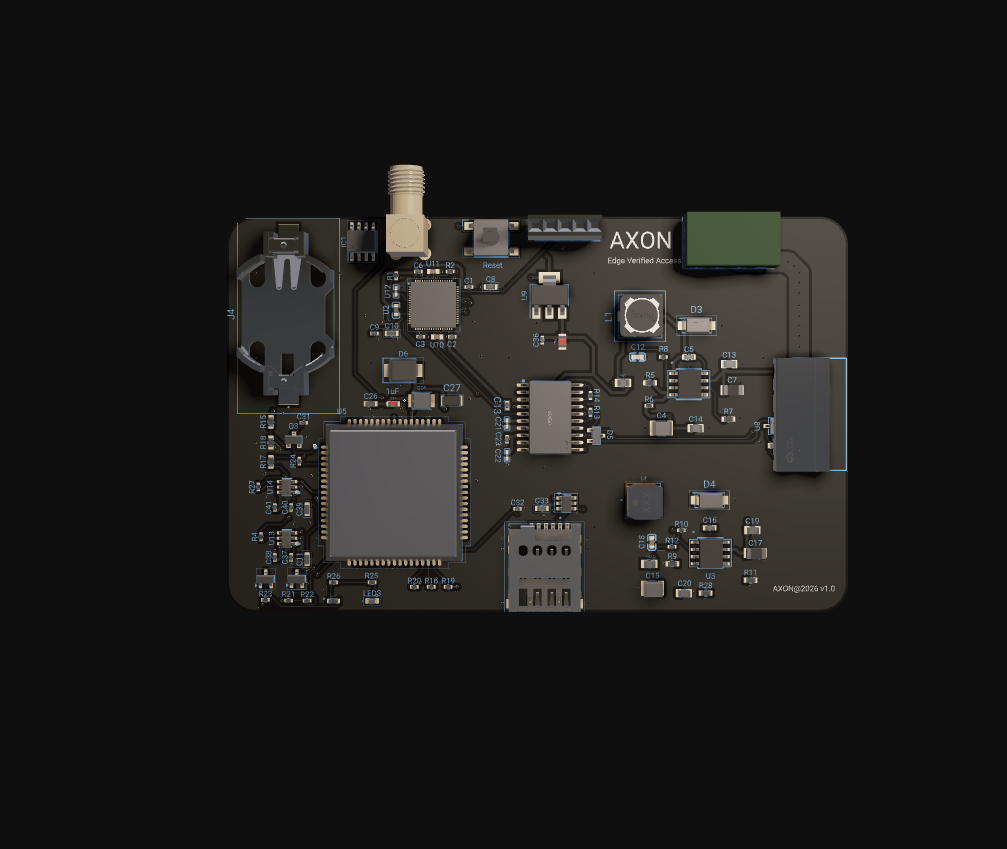
The cloud bridge for an AXON site — primary Ethernet uplink with GSM fallback for outage tolerance. Speaks MQTT to the AXON cloud platform and translates between the on-site encrypted CAN bus and the off-site control plane.
A sub-GHz LoRa radio for distributed sites where running cable is impractical — gated agricultural facilities, utility substations, multi-building campuses. Forwards encrypted access events to a base station up to several kilometres away.
Elevator Master Module (Direct Controller Integration)
A specialised cabin master that integrates directly with elevator controller protocols (Otis, Kone, Schindler interfaces under evaluation) rather than driving relays into the call-button matrix. Cleaner integration where the elevator vendor supports a digital command channel.
Output modules for driving locks, gates, barriers, and signal channels — from compact dual-relay boards to a 32-channel solid-state matrix for high-density installations.
AXON RBN-2
Dual-Relay Expansion Module
A CAN-bus-addressable dual-relay board for door releases, call signals, gate triggers, or auxiliary signal channels. Same encrypted protocol as AXON Node — drops onto the existing bus with a hardware DIP address.
A high-density solid-state relay panel for sites that need many simultaneous outputs — multi-tenant office floors, multi-bay parking structures, large campus signal matrices. SSR outputs eliminate mechanical wear and contact bounce on heavily-cycled channels.
A simple, low-cost dual-relay add-on for installations that need an extra pair of outputs near an existing Node. Driven from the same CAN bus, addressed via DIP switch, packaged in a smaller footprint than the full RBN-2.
Boards that adapt the AXON system to retrofit elevator cabins, drive smart user-interface buttons, and bridge legacy push-button infrastructure onto the access bus.
AXON PBC-Bridge
Push-Button Converter Bridge
A retrofit bridge that intercepts the existing call-button wiring in an elevator cabin and converts presses into AXON bus events, allowing the cabin master to gate floor calls without rewiring every button to a relay output. The cleanest path for retrofitting older cabins.
A capacitive touch button with an integrated biometric pad as a second factor — replaces mechanical call buttons in high-spec installations where credentials and biometrics gate floor access at the cabin. Brand and final naming under review.
Beyond the per-product deep-dives, the library contains topic-level articles that explain the concepts these products embody — protocol choices, anti-cloning strategy, and reference architectures for common building types. Read these first if you are evaluating AXON against alternatives, or if you want to understand the design decisions behind the product line before drilling into specific modules.
How DESFire mutual authentication actually defeats card cloning, and why Wiegand-26 alone has been a known-broken credential standard for over a decade.
How to topology multiple entrances, garages, and floors on a single AXON CAN backbone without compromising bus reach or addressing.
Need a system sized for your building?
We supply AXON modules from local stock in Kosovo and can size the CAN backbone, communication module, and reader configuration for your specific elevator, building entrance, or campus layout. Typical lead time for stocked configurations is one to two weeks.